XGram is a non-custodial instant cryptocurrency exchange service built for quick wallet-to-wallet conversions. Its pitch is familiar: choose a pair, send the input asset, and receive the output asset without maintaining a long-term exchange balance. The market is crowded with services making that promise, from ChangeNOW and SimpleSwap to smaller routing platforms. XGram's challenge is not explaining the product. It is proving that its execution, pricing, and support are dependable enough to deserve trust alongside better-known names.
The service is designed for convenience rather than trading sophistication. There is no visible order book, no advanced chart package, and no reason to use XGram if your goal is active price discovery. It exists for the person holding one asset in a wallet who wants another asset in a wallet. That is a legitimate use case. It can save time and paperwork compared with funding a centralized exchange, converting through spot markets, and making a separate withdrawal.
The non-custodial description is useful but needs limits. XGram does not ask customers to keep a permanent platform balance, which reduces exposure to an exchange bankruptcy or account lock after funds have already settled. During an active exchange, however, you still send coins to a deposit address controlled within the service's processing route. There is a period in which you are relying on XGram and its liquidity infrastructure to perform exactly as quoted. Non-custodial does not mean trustless.
The usual workflow is straightforward. Pick the asset you are sending, choose the desired payout asset, enter the amount, provide a destination address, and transfer the deposit. The order page should then show the deposit status and payout progress. This format is easy to use, but it leaves little room for correcting mistakes. A typo in an address, a memo omitted for an exchange deposit, or a transfer on the wrong chain may turn a simple swap into an expensive recovery attempt.
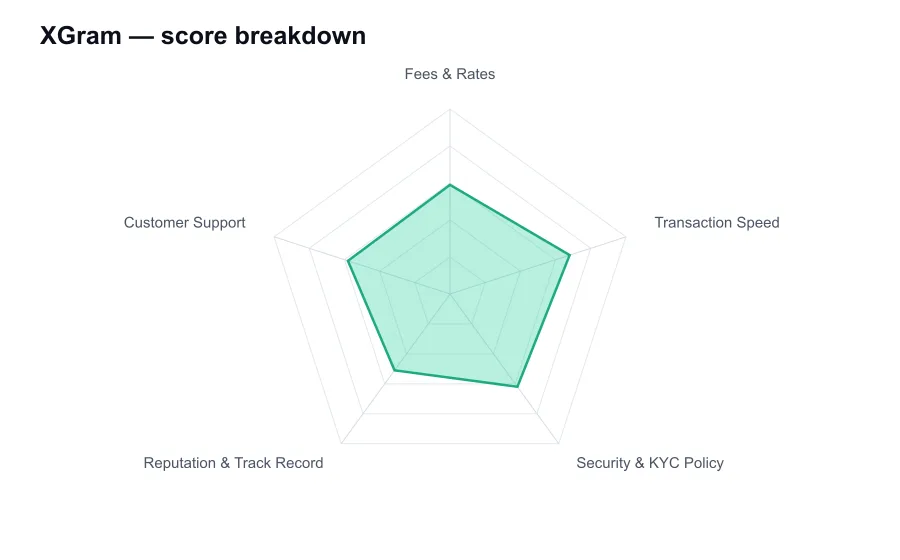
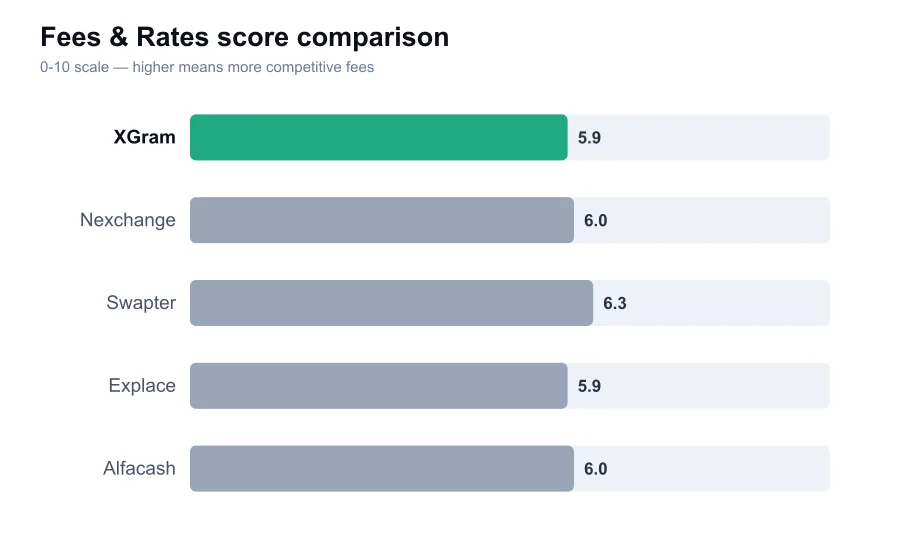
Fee transparency is the principal concern. Like many instant exchangers, XGram generally presents the customer with a final exchange quote rather than a universal published trading-fee table. That quote may include market spread, execution costs, the service margin, and network charges. This is not automatically unreasonable. Routing crypto through external liquidity costs money. But it does make headline claims about competitive rates less meaningful unless you compare the payout amount with another provider at the same moment.
I would not use XGram blindly for a large order on the assumption that the quoted rate must be the best available. Check the same pair at Trocador, ChangeNOW, SimpleSwap, or a liquid centralized exchange. With major assets, even a fraction of a percent can matter. With small-cap tokens, the difference can be much larger because the available route may have thin liquidity and a wide embedded spread. The right metric is the net amount in your receiving wallet, not a vague promise of low fees.
Speed is good in the narrow situations for which instant exchanges are built. A liquid swap on a fast network can move through the system promptly once the incoming transaction has enough confirmations. Bitcoin, Ethereum, and other chains still impose their own timing. If a sender uses a low network fee, the order cannot proceed until the deposit is confirmed. If the receiving chain is congested, the payout itself can be delayed. XGram cannot bypass those basic blockchain constraints.
There are also operational delays beyond confirmations. Large transactions can need manual review, and a liquidity source can have a temporary issue with a particular coin or network. These are not rare corner cases across the instant-exchange industry. The difference between providers lies in how clearly they communicate the delay and how effectively they resolve it. XGram does not have the depth of public operational evidence that would make me comfortable assuming every exceptional order will be handled as smoothly as a routine one.
XGram's KYC posture is best described as conditional. Many instant conversions may be available without standard account registration or upfront identity submission. Yet the service can require verification where AML controls, partner requirements, or transaction-risk checks demand it. That is a more honest description than calling the service permanently anonymous. If your funds have a history likely to trigger blockchain analytics alerts, do not treat an instant exchanger as a guaranteed path around a review.
From a security perspective, the most attractive element is the wallet-to-wallet model. You can receive the converted asset directly in an address you control rather than accumulating a balance on another platform. Still, users need to protect themselves from phishing. Bookmark the official domain, check the certificate and URL carefully, and do not trust exchange links sent through unsolicited messages. Fake instant-exchange pages can look convincing and are designed to steal deposits before a legitimate service ever sees them.
Reputation is where XGram trails more established instant exchange brands. It is an active service, and its basic product is familiar, but there is less independent history to draw on than with platforms that have operated publicly through several major crypto cycles. A lower reputation score does not mean an accusation of fraud. It means a reviewer should distinguish between a service that appears functional and one that has accumulated a large, verifiable record of handling difficult support cases over many years.
That distinction should influence transaction size. A small test swap is not paranoia, it is good crypto hygiene. It confirms the deposit address format, checks the selected network, measures real completion time, and lets you see whether the received amount matches the quote. Once that works, you can decide whether the convenience is worth using again. Sending a large first transaction to any lesser-known instant exchanger is an unnecessary gamble.
Support is available through XGram's customer channels, but support quality is difficult to judge from normal successful swaps. Every service looks responsive when an order completes in ten minutes. The meaningful test is a stuck deposit, an expired fixed-rate window, a destination tag mistake, or a transaction held for review. In those cases, send the order ID, transaction hash, and complete wallet details in the first message. Clear evidence gives support the best chance to trace the transaction.
XGram is not the place to chase a complex multi-leg trade, move fiat, or store crypto. It is a convenience layer. Use it for simple conversions where the final quote is competitive and the transaction is sized sensibly. If you need detailed fee accounting, API trading, regulated fiat rails, or a well-developed public support record, a larger exchange will feel safer and more accountable.
My take is cautious rather than hostile. XGram can serve a practical purpose for users who want a quick, no-account crypto conversion and know how to verify addresses and networks. The lack of a clear universal fee schedule and its lighter reputation footprint are real drawbacks, not minor footnotes. It earns consideration for smaller routine swaps after comparison shopping. For large amounts, I would choose a better-established exchange or an aggregator that gives more visible partner choice.