EasyBit is a non-custodial instant crypto exchange service aimed at people who want to convert one asset into another without opening a trading account. It sits in the same broad category as ChangeNOW, SimpleSwap, StealthEX and Exolix, but its interface leans harder into a quick, consumer-friendly swap experience.
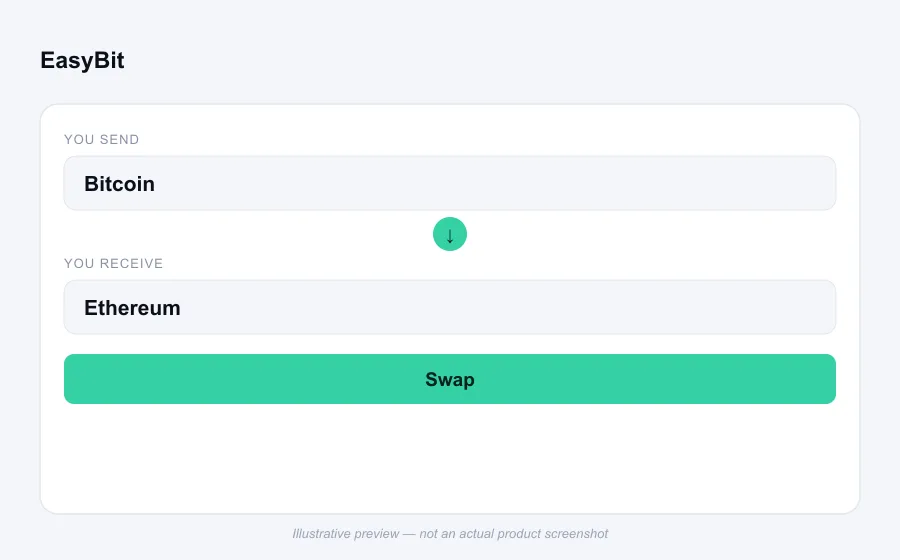
The basic deal is straightforward. Choose a pair, enter the receiving address, send coins to the generated deposit address, and EasyBit sources liquidity and sends the output. There is no order book to study and no portfolio page full of trading tools. That simplicity is the point.
EasyBit offers floating and fixed-rate quotes. A floating quote can improve if the market moves in your favor, though it can also settle below the amount shown at the start. Fixed-rate swaps give more certainty, but the protection has a price built into the quote and the deposit must arrive within the stated time window.
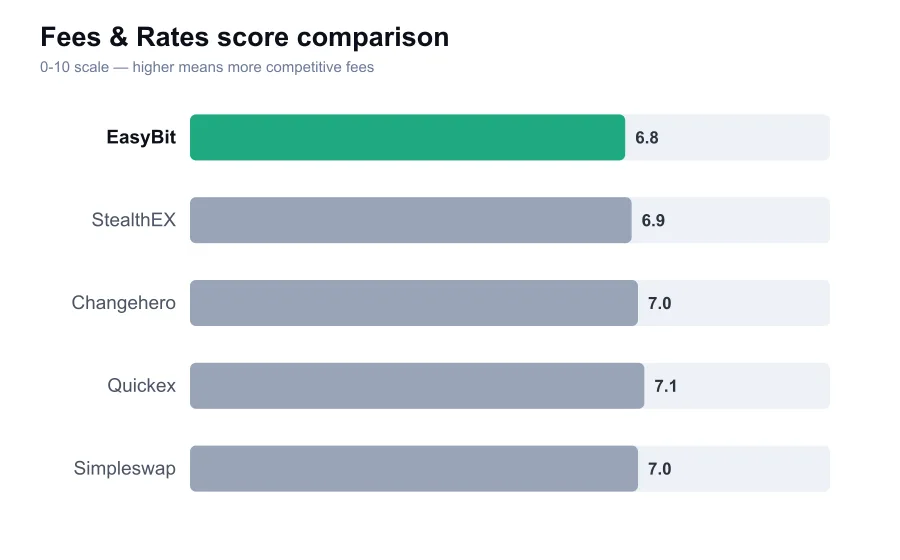
The service does not publish a single universal trading fee that applies to every pair. Its effective cost is built into the quoted rate, alongside network fees and liquidity-provider spreads. That is common among instant exchangers, but it makes a direct fee comparison harder than it should be.
In practice, EasyBit is rarely the cheapest route for a major pair such as BTC to USDT or ETH to USDC. A liquid centralized exchange can often beat it for users prepared to deposit, trade, and withdraw. EasyBit is competitive when convenience matters more than shaving every basis point off a one-off conversion.
The quote screen is where users should be critical. Compare the final amount with at least one rival before sending funds, especially on larger transactions. The service may show an attractive rate initially, but the real comparison is the exact amount expected at the destination after every spread and network charge.
Speed is usually good for ordinary swaps. A transaction cannot complete before the incoming deposit is confirmed, so Bitcoin swaps naturally take longer than transfers on Tron, Solana, or Polygon. Once deposits are credited and liquidity is available, most uncomplicated conversions are processed within minutes.
That said, instant exchange does not mean guaranteed instant settlement. A congested blockchain, an incorrectly selected network, a token with low liquidity, or a compliance review can turn a quick swap into a support case. Users moving time-sensitive funds should avoid treating any third-party exchanger as a settlement rail with a guaranteed deadline.
EasyBit presents itself as non-custodial, meaning it does not ask customers to keep a standing balance in an exchange account. This lowers exposure to the classic risk of leaving coins on a centralized venue. It does not eliminate counterparty risk, because the provider still controls the swap process after it receives the deposit.
Its KYC position is more nuanced than marketing shorthand such as no-KYC suggests. Routine swaps can generally be initiated without account verification, but the service can request identity information or source-of-funds evidence where its risk systems flag a transaction. If that happens, the exchange can pause processing while it reviews the case.
That policy is not unusual. It resembles the approach used by many non-custodial swap platforms that rely on blockchain analytics and regulated liquidity partners. The weak point is practical rather than theoretical: a user who expected anonymity may find their coins stuck in review at precisely the moment they need access.
EasyBit has built a recognizable presence in the instant-exchange segment, though it does not carry the long institutional record of Kraken or Coinbase. Public review sites show plenty of successful swaps, but review aggregators are not proof that a provider will handle a difficult case well. The decisive test is what happens when a rate changes, a deposit is delayed, or compliance is triggered.
Support is available through the website and email channels, and the team is generally positioned as a 24/7 operation. Straightforward questions tend to be resolved faster than unusual cases involving failed deposits, wrong memo tags, or compliance checks. Keep transaction IDs, screenshots, and the exact destination address ready before contacting them.
EasyBit is best treated as a convenience service, not a trading venue or long-term wallet. It can be useful for a fast conversion across assets and networks, especially for users who do not want an account. For recurring or high-value trading, transparent order-book pricing at a strong exchange remains the better discipline.
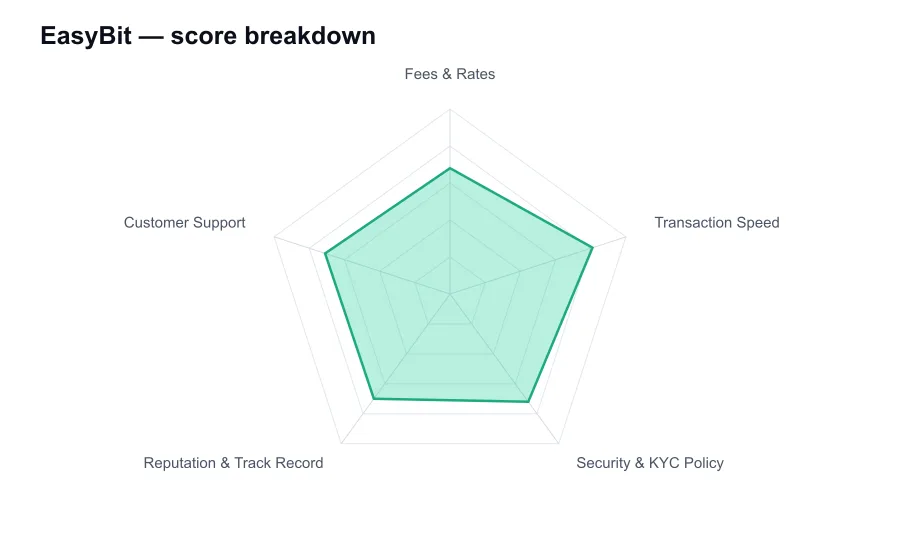
My view is that EasyBit is a credible option in a crowded category, but it does not deserve blind trust just because it is non-custodial. The clean flow, broad asset coverage, and fixed-rate option are real strengths. Its main weaknesses are quote opacity, variable execution conditions, and the possibility of a KYC review after funds have already been sent. Use it for contained swaps, compare quotes, and do a small test before committing a large amount.